



White Rabbit

Reliable Synchronization in Distributed Networks: Discover the White Rabbit Solution

Precision at Every Node

Synchronization isn’t a luxury – it’s an absolute necessity when working with high frequencies and distributed systems. Even minor delays at lower speeds can become a serious problem when fast and precise measurements are required.  

When the smallest synchronization error multiplies, the results can show… motion faster than the speed of light! That’s why the more complex your system and the faster your devices operate, the better your synchronization needs to be.  

This is where White Rabbit comes in – a technology that provides sub-nanosecond synchronization over Ethernet and deterministic data delivery, regardless of the number of nodes or the distance between them. This means you can predict in advance when and in what order data will arrive at its destination. It allows precise time-stamping of measurements and coordination of experiments without worrying about delays or transmission uncertainty. 

An additional advantage of White Rabbit is its flexibility and scalability – the network can span dozens of kilometers, with every system element working coherently as part of a larger whole. The result is accurate, reliable real-time data, even in the most demanding applications – from scientific research to critical infrastructure. For systems where precision and consistency are key, White Rabbit is simply a must-have today.  

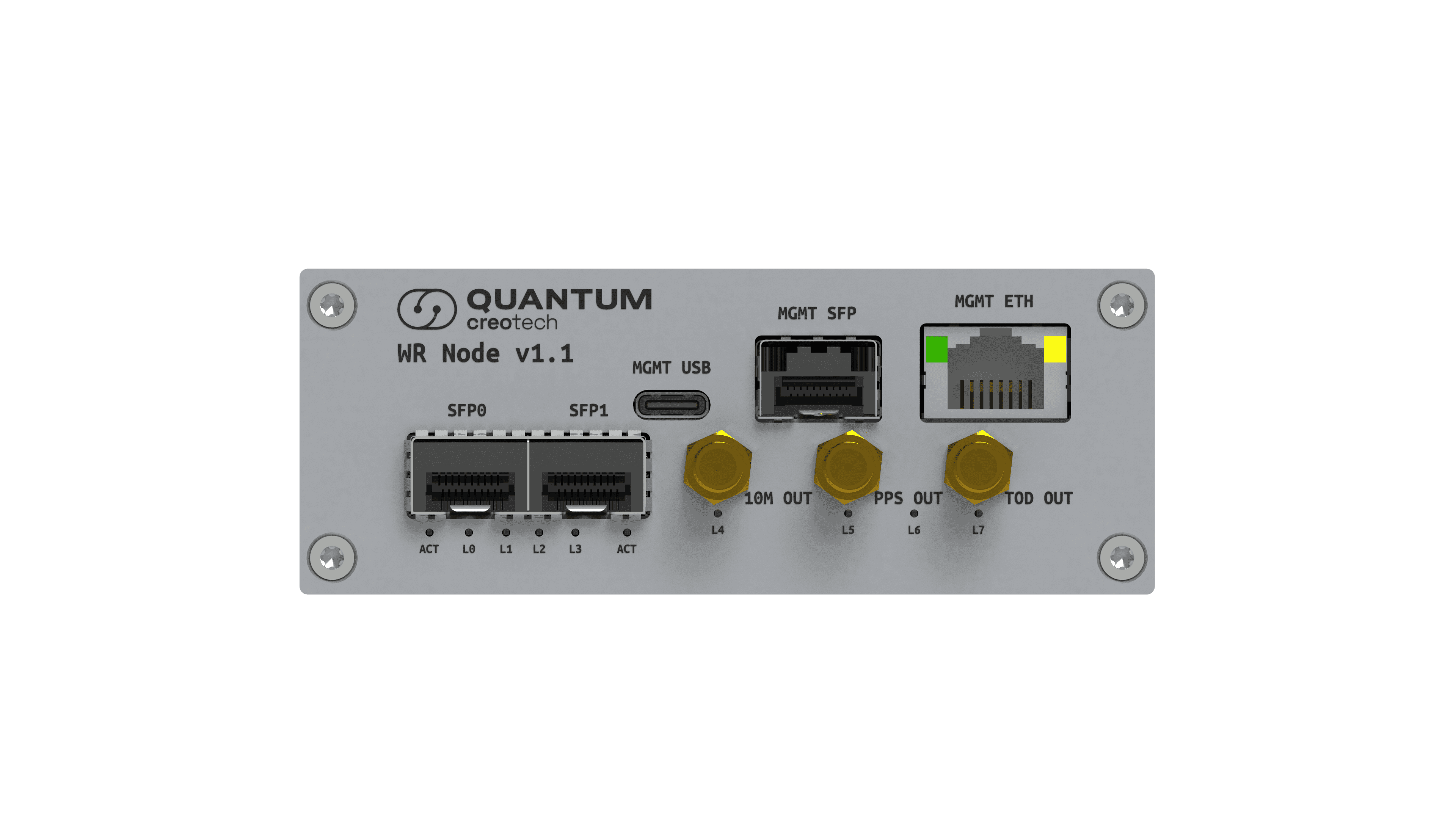
At Creotech Quantum, we are developing an open-hardware White Rabbit (WR) solution to provide, among other things, a cost-effective, energy-efficient node, a compact two-port WR switch, and WR device software adapted for industrial environments. 

Creotech Quantum Offers: 

• White Rabbit hardware and software solutions 

• Expert support, consulting, and design services for White Rabbit systems 

WR.png

We are proud members of the White Rabbit collaboration. 

Summary of White Rabbit Capabilities:

Sub-nanosecond synchronization with picosecond precision across distributed systems 

Thousands of nodes connected over typical distances (~10 km per node) 

• Reliable operation over tens of kilometers 

• Deterministic gigabit Ethernet data transfer 

Precise time-stamping of measurements 

• Easy triggering for data acquisition in large installations 

The main applications of White Rabbit technology include control and data processing systems that require deterministic timing over long distances. 


Background

Why White Rabbit?

  • Precise synchronization – allows network clocks to synchronize with sub-nanosecond accuracy.
  • Scalability – the network can be easily expanded with additional nodes and devices without losing accuracy.
  • Reliability – based on the SyncE (Synchronous Ethernet) and PTP (Precision Time Protocol) standards, which increases stability and compatibility.
  • Media and modules are compatible with the IEEE 1588 standard (time synchronization protocol).
  • Low cost – uses widely available fiber-optic technologies and network components.
  • Flexibility – suitable for both small laboratories and large distributed infrastructures.
  • Openness – an open-source system that can be developed and adapted to specific user needs.
  • Support for critical applications – ideal for applications requiring simultaneous, ultra-precise operation of multiple devices.
  • Independence – White Rabbit can distribute time from any reference source (GNSS, atomic clocks, internet) or serve as a time reference itself when other sources are unavailable.
  • Robustness to external factors – The White Rabbit network is based on optical fiber, ensuring a stable time signal even in the presence of electromagnetic interference. Phase compensation mechanisms further guarantee full stability despite temperature variations.
  • Expert support from the Creotech Quantum team

Applications

• 5G telecommunications and next-generation networks 

• Financial transactions 

• Power grid synchronization 

• Geolocation and positioning 

• Scientific infrastructure: particle accelerators, networks of astronomical observatories 


Industries

  • Research laboratories and particle accelerators
  • Quantum engineering
  • Financial institutions
  • Telecommunications
  • Energy sector
  • Geodesy and critical navigation
  • Defense and space industry

Downloads / Useful Links

FAQ

Precision Time Protocol (PTP) provides high synchronization accuracy but does not fully compensate for variable delays in fiber optics (e.g., caused by temperature changes). In many industrial applications (though, as it turns out, not all), PTP precision is “sufficient,” but for quantum experiments or particle physics it is definitely inadequate. 

White Rabbit (PTP-WR) was developed at CERN to overcome these limitations. It is based on the vision of a new synchronization technology that would be efficient, standards-based, and fully open-source. In fact, this vision became a reality over a decade ago (the prototype was developed in 2009). 

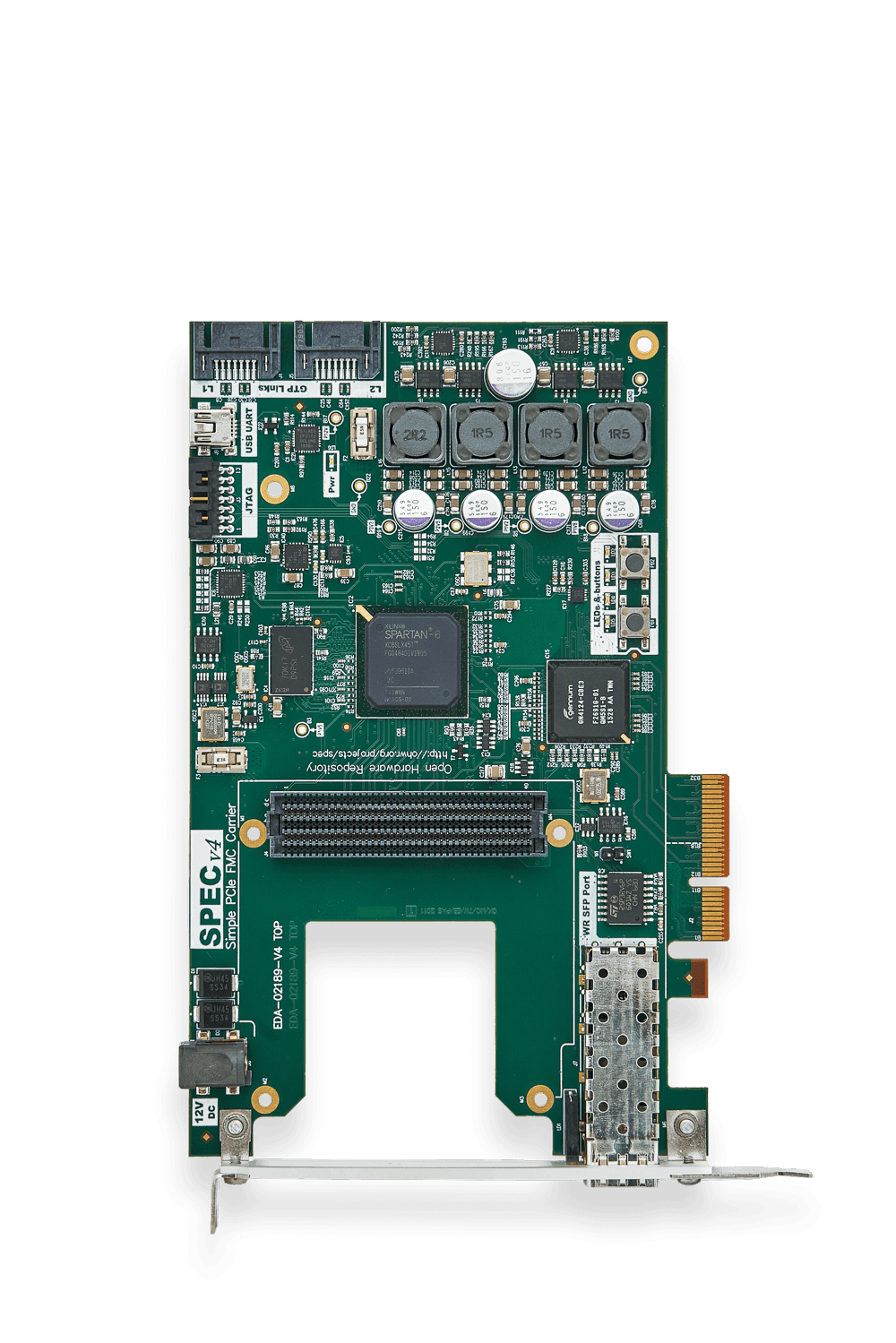
WR enables Ethernet networks to achieve sub-nanosecond accuracy over large areas and to support thousands of nodes based on the same master clock. However, this requires WR hardware — primarily White Rabbit Switches and White Rabbit NIC cards (such as the Simple PCIe Carrier SPEC in our offer). Standard Ethernet devices can coexist in the same infrastructure but do not participate in the precise synchronization mechanisms. Only specialized WR components allow maintaining sub-nanosecond accuracy even across tens of kilometers. 

The system provides automatic delay compensation through phase measurement and SyncE, deterministic real-time data transmission, and gigabit-speed data transfer. 

Thanks to these capabilities, White Rabbit is used in sectors requiring extremely precise synchronization, such as telecommunications, finance, and smart power grids. 

The first deployments at CERN and GSI demonstrated that White Rabbit maintains sub-nanosecond precision in distributed systems with thousands of nodes. Since then, many other users have adopted this technology for real-time distributed systems. 

A prime example is the Square Kilometre Array (SKA) project. Since 2022, the largest radio telescope in the world is being built simultaneously in two locations: observatories in South Africa and Australia. SKA aims for a total collecting area of one square kilometer, making it 50 times more sensitive than any existing radio telescope and enabling sky observations more than ten thousand times faster. The results will allow the most precise tests of relativity and the search for extraterrestrial life. 

In SKA, the time synchronization provided by White Rabbit is critical to ensure that the various parts of the vast radio telescope network can record cosmic signals accurately and that data from multiple antennas is synchronized for precise analysis. 

Tens of thousands (or simply thousands, depending on the setup). 

Delays grow linearly with distance, mainly due to fiber length and signal processing in nodes. However, thanks to phase measurements and compensation mechanisms in White Rabbit, practical sub-nanosecond precision is maintained even over tens of kilometers. 

White Rabbit operates over standard Ethernet (IEEE 802.3), allowing the same network to be used for both data transmission and time synchronization. However, to achieve the renowned sub-nanosecond precision, WR hardware is required — primarily White Rabbit Switches and White Rabbit NIC cards (such as the Simple PCIe Carrier SPEC in our offering). Standard Ethernet devices can coexist on the same infrastructure but do not participate in the precise synchronization mechanisms. Only specialized WR components can maintain sub-nanosecond accuracy even across tens of kilometers. 

WR and NTP 

A time gateway/server can be set up to take a reference from the WR network and present it in NTP format for devices that do not support WR. This allows, for example, standard servers on the same infrastructure to use White Rabbit’s precise time — albeit with limited precision (microseconds instead of nanoseconds). 

WR and GPSDO 

The most common setup is a WR grandmaster clock synchronized to a GPSDO. The GPSDO provides a UTC reference (the global time standard) with nanosecond-level accuracy, which White Rabbit then distributes over the Ethernet network with sub-nanosecond deviation. In this configuration, WR effectively becomes a “time distributor.” 

WR and other PTP systems (IEEE 1588) 

White Rabbit is an extension of PTP, operating on the same principles but with additional mechanisms (SyncE + phase measurements). A standard PTP client will not benefit from the full WR precision, but a WR network can be configured to provide time in standard PTPv2 format, giving ordinary PTP devices precision at their respective level (below one microsecond). 

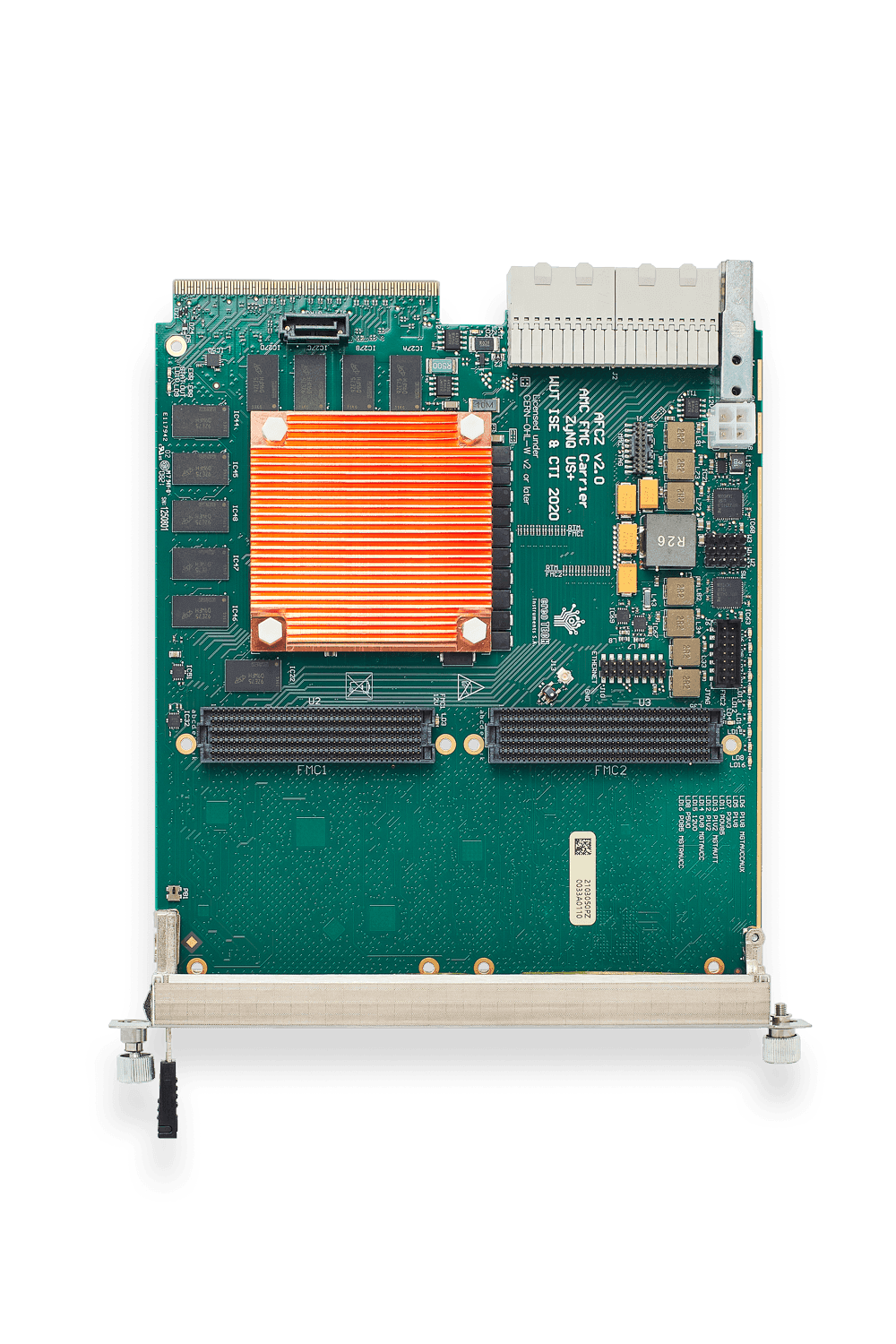
Yes, full compliance is ensured. WR cards exist in the MTCA.4 standard (e.g., AMC FMC Carrier – AFC, AFCZ, AFCKU), designed for use in large-scale research installations. This makes WR compatible with MTCA requirements, enabling deployment in accelerator infrastructure, telecommunications, and other real-time control systems. 

White Rabbit is based on Ethernet and PTP (IEEE 1588), ensuring alignment with core telecom standards. It offers much higher precision than standard PTPv2 (sub-nanosecond vs. sub-microsecond). Additionally, WR fully meets 5G network requirements and provides significant margin where synchronization within ±130 nanoseconds is needed (for precise transmission between base stations). 

Yes, it is possible, but with some considerations: 

Clock hierarchy – each WR network has its own Grandmaster Clock (the primary clock). When connecting networks, a single overarching grandmaster must be chosen, or a multi-level clock structure must be implemented to maintain synchronization consistency. 

Delay compensation – the larger the network and the more nodes between segments, the more important it is to measure link delays accurately and compensate clock phases to maintain sub-nanosecond precision. 

Scalability – White Rabbit is designed to support tens of thousands of nodes, so connecting multiple networks into one is feasible if the proper topology and WR hardware (switches, nodes) are used. 

Data performance – combining networks does not negatively affect Ethernet data transfer, but all nodes must support WR and PTP protocols to keep synchronization deterministic. 

White Rabbit does not require special fibers; standard single-mode fiber (SMF) can be used depending on distance and bandwidth requirements. For example, single-mode fiber works well over long distances (kilometers), maintaining White Rabbit’s sub-nanosecond precision even over 10–100 km. 

White Rabbit was designed for distributed real-time systems in particle accelerators and scientific experiments, where a single node failure cannot halt the entire system. Therefore, it includes redundant signal paths, backup master clock takeover, and dynamic synchronization path updates. 

White Rabbit was designed for large distributed real-time systems, where manual diagnostics are impractical. It supports remote monitoring and real-time diagnostics using built-in functions in White Rabbit switches and nodes, allowing users to: 

Track node and switch status – check whether devices are active and synchronized. 

Monitor delays and clock phase – with fiber delay and clock phase measurement mechanisms, network administrators can continuously monitor synchronization accuracy. 

Detect failures and anomalies – the system automatically signals connection, time source, or node issues. 

Remotely configure nodes and switch redundant time sources – minimizing downtime and simplifying network maintenance. 

White Rabbit is designed for demanding industrial environments, keeping the signal stable even with electromagnetic interference and temperature fluctuations. 

The WR signal is transmitted over fiber, making the network virtually immune to industrial environmental effects. Nodes and switches are further equipped with shielding and filters to minimize local EM interference. Standard WR devices operate within typical industrial ranges, and specialized switches/nodes can extend this. Clock phase and fiber delay compensation mechanisms ensure synchronization is maintained despite temperature variations. 

Reconfiguration is very fast, but depends on network topology and node types: 

WR nodes and switches – typically a few seconds to full synchronization after connecting a new device. 

Larger networks with dozens or hundreds of nodes – reconfiguration takes longer, usually no more than several tens of seconds, thanks to automatic grandmaster detection (BMC algorithm). 

Importantly, when a node fails or is added, the network adapts almost in real time without interrupting already synchronized nodes. 

Absolutely. WR was designed for such applications from the start. It provides sub-nanosecond precision (sub-ns), while 5G networks require synchronization within ±130 ns, giving WR a significant precision margin. WR uses IEEE 1588 (PTPv2) and Ethernet, the foundation of telecom synchronization. WR can also support thousands of nodes, allowing integration into large telecom infrastructures. Grandmaster selection and delay compensation mechanisms ensure synchronization even in case of partial network failures. WR not only meets current 5G standards but is also ready for future network generations, where precision and deterministic data transfer will be even more critical. 

White Rabbit performs excellently in these scenarios. Using IEEE 1588 (PTPv2) and Ethernet as a foundation, WR enables precise time-stamping with sub-nanosecond accuracy, which is critical for high-frequency financial operations, where every microsecond can determine the success or failure of a transaction, and inaccurate time synchronization can lead to errors, financial losses, and chaos. Accurate synchronization prevents errors, financial losses, and operational chaos, allowing deterministic, reliable transactions and minimizing risks associated with delays or ambiguous timestamps. 

In satellite applications, WR can serve as a system supporting synchronization between ground stations or in hybrid ground-satellite networks, where precise time management is critical — for example, in military radar systems, satellite observation, or strategic communications. Full integration with satellites may require additional corrective solutions, such as compensation for radio transmission delays. 

In 2020, we delivered 160 White Rabbit switches for the General Machine Timing (GMT) synchronization system at FAIR, currently under development at the GSI Helmholtz Centre for Heavy Ion Research in Germany. Once completed, FAIR will become one of the world’s most advanced particle accelerator facilities. Thanks to the unique White Rabbit technology, it will be possible to synchronize several thousand nodes simultaneously with sub-nanosecond accuracy. 

Our delivery covered not only the manufacturing and assembly of the electronics, but also full device integration, along with rigorous quality and reliability testing — from optical inspections and week-long stress tests to climate chamber testing and vibration tests simulating transport conditions. 

As a result, FAIR gains a reliable and ultra-precise time synchronization infrastructure. Read more HERE. 

Another example? We delivered White Rabbit switches to ASTRON, operator of the LOFAR network. The robust hardware enabled the deployment of a highly reliable clock distribution network, significantly improving synchronization precision and the overall performance of the radio telescope. Read more HERE. 

We also maintain ongoing cooperation with CERN, home to the world’s largest particle accelerator — the Large Hadron Collider. We regularly supply CERN with components from the White Rabbit ecosystem, including cards, switches, and boards. Read more HERE. 

The difference lies mainly in signal precision and stability: 

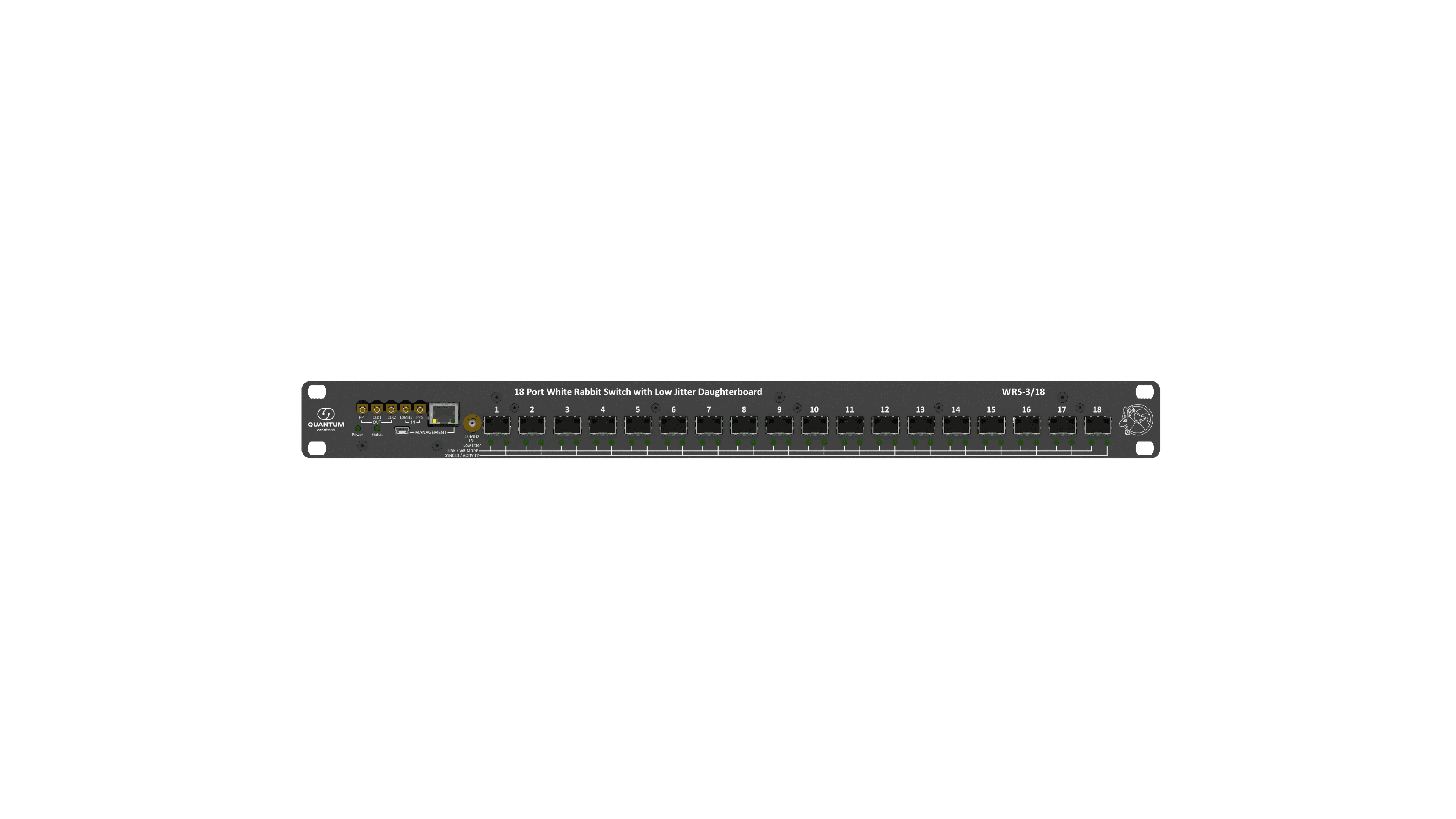
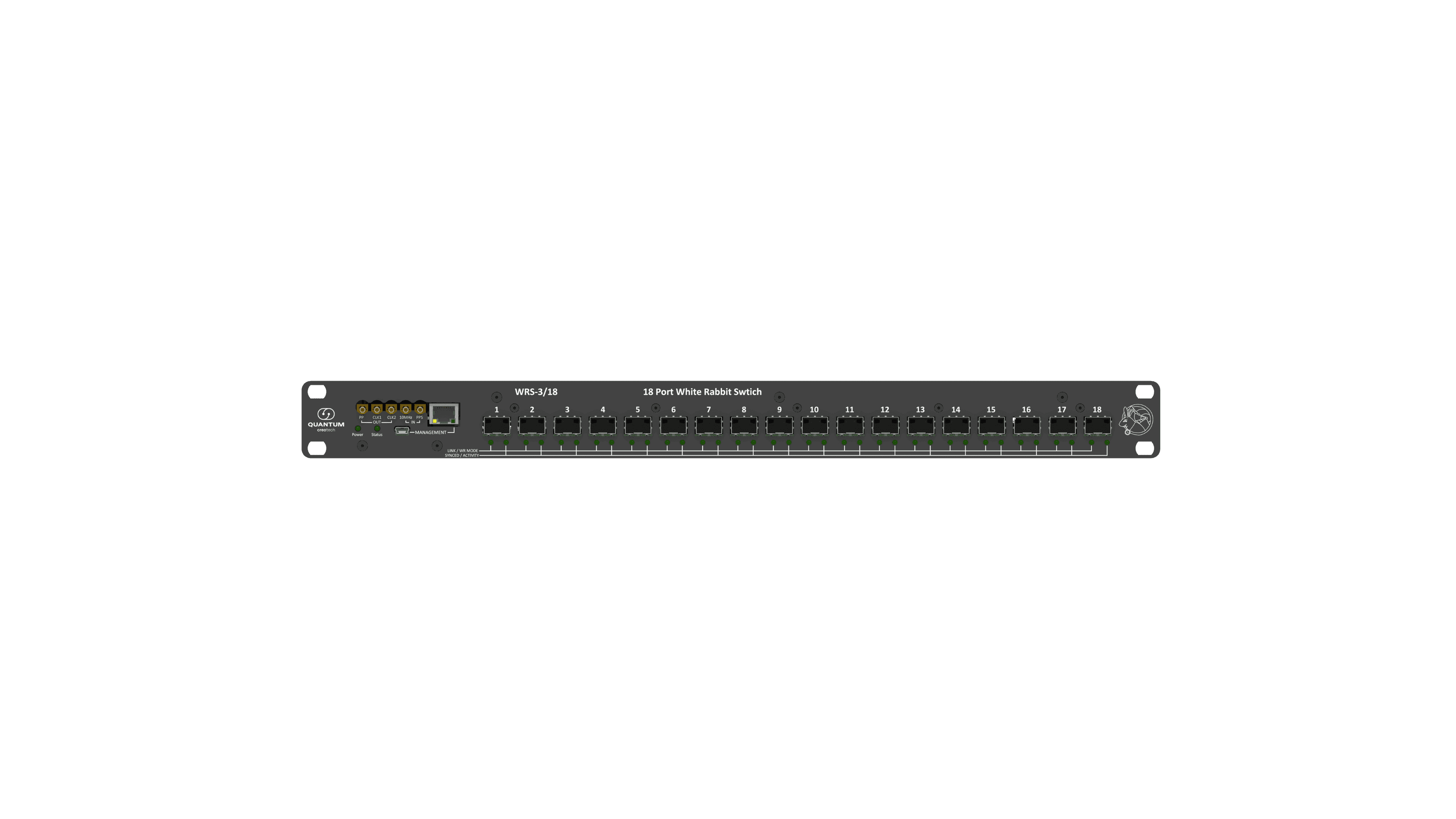
Standard WR Switch – provides sub-nanosecond synchronization and is suitable for most industrial, research, or telecom applications. It performs well in networks with thousands of nodes where precision on the order of several hundred picoseconds is sufficient. 

Low Jitter version (WRS-LJ) – optimized to minimize jitter (clock signal variance), resulting in higher phase stability and accuracy. It is particularly useful in scientific experiments requiring extreme precision, particle physics systems, or networks where every picosecond counts. 

Simple PCIe Carrier (SPEC) – ideal for deployments where extreme throughput or multi-channel ADCs are not required. 

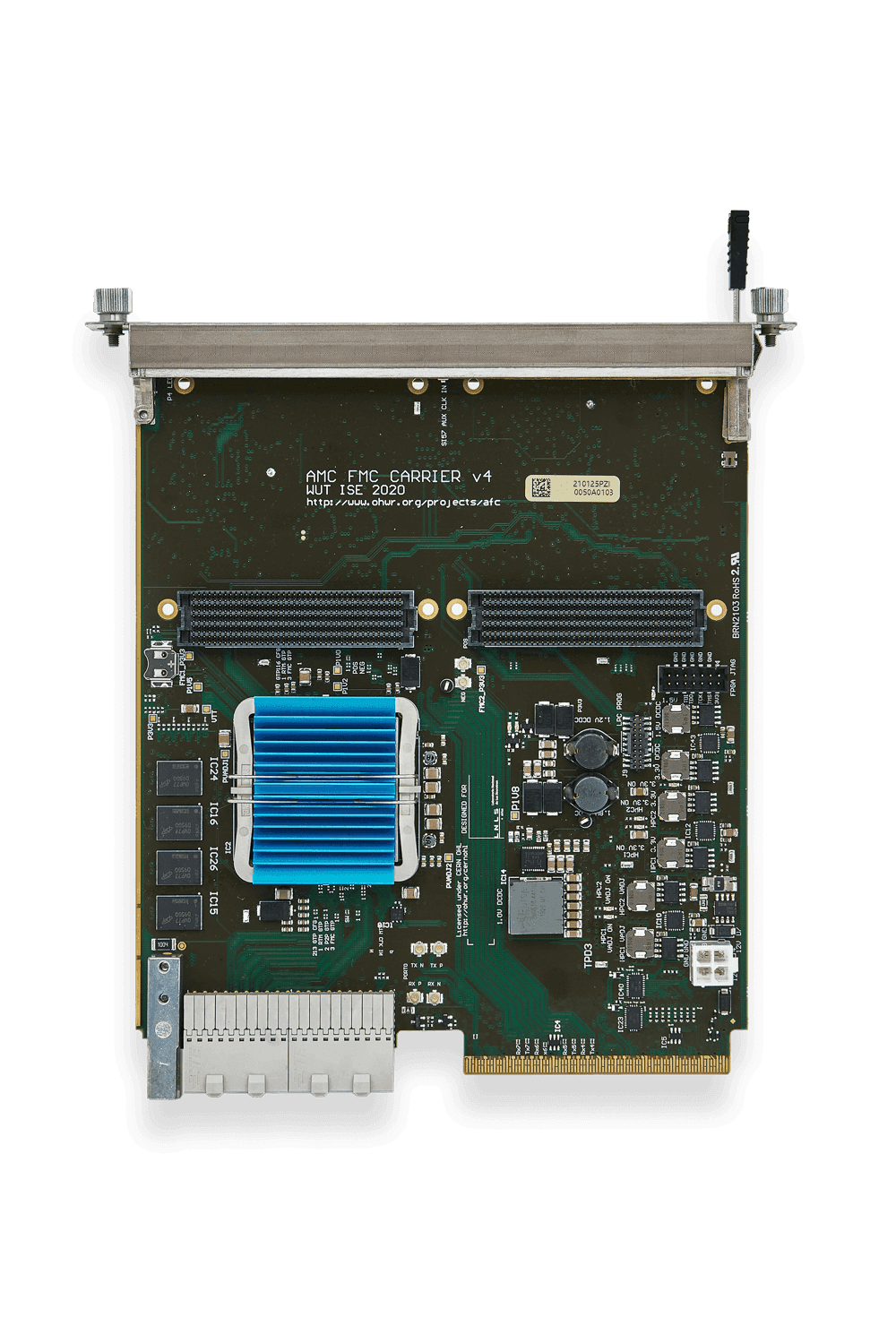
AMC FMC CARRIER – AFC V4 – for applications needing more clock flexibility and support for multiple time sources. 

AMC FMC CARRIER – AFCZ (ZynQ) – suitable where both high precision and advanced hardware capabilities are required, e.g., accelerators or quantum laboratories. 

AMC FMC Carrier Kintex Ultrascale – AFCKU – for the most demanding control systems in large research installations, where both throughput and minimal jitter are critical. 

We always aim to assist our Clients. If you have questions, just email us — we will suggest the best solution. For more extensive consultations, we offer paid engineering hours. 

Yes, most White Rabbit modules, especially AFC, AFCZ, and AFCKU variants based on programmable FPGA/SoC, can be customized. Customizable solutions include: 

FPGA/SoC – modify logic configuration, upload custom gateware or extensions. 

Interfaces – add or modify FMC, RTM, USB, SATA, GTH interfaces according to integration needs. 

Clock sources and synchronization – adjust clock circuits and fiber delay compensation mechanisms. 

Software and firmware – all WR modules have fully open drivers and firmware, enabling changes in real-time handling, protocols, or monitoring. 

Power and debugging options – some modules allow customization of power sources or addition of custom diagnostic functions. 

Learn More About Our Solutions